

About SWR Amps
Brand Overview and Website Purpose
SWR stands as a significant name in the world of professional bass amplification. Founded on principles of clarity, power, and portable performance, the brand carved a distinct identity for itself among discerning bass guitarists. The SWR sound is characterized by a modern, high-fidelity approach, delivering a full-frequency response that ensures the bassist’s tone is heard with pristine clarity and authoritative depth. This website serves as the central hub for the legacy and product information of SWR. Its primary purpose is to educate visitors about the brand’s pioneering history, its innovative product lines, and the core philosophy that guided its development. Whether you are a long-time user of SWR equipment or a musician discovering the brand for the first time, this page provides a comprehensive foundation for understanding what made SWR amplifiers a benchmark in the industry.
We aim to preserve and present the technical achievements and sonic character that defined SWR. The content here is designed to be a reliable resource, explaining not just what the products were, but why they mattered and how they influenced modern bass amplification. From the engineering philosophy behind the circuits to the practical benefits for performing musicians, we explore the full scope of the brand’s contribution. This overview will guide you through SWR’s journey, its product families, and the values that continue to resonate with bass players who seek that distinctive, clear, and powerful low-end foundation.
Brand History and Development
The story of SWR begins in 1984 with its founder, Steve W. Rabe. With a clear vision for the future of bass amplification, Rabe launched the SWR Sound Corporation. The company’s first commercial product, the PB-200 hybrid tube/solid-state bass guitar amplifier, immediately signaled a new direction. This hybrid approach sought to combine the warm, organic character of vacuum tubes with the reliability, headroom, and low-end definition of solid-state electronics. It was a formula that would become a cornerstone of the brand’s identity, addressing a growing demand for bass amplifiers that could deliver both nuance and sheer power without excessive weight or fragile components.
The development of SWR was marked by a series of influential amplifier models that quickly earned a reputation as “tone giants” in the professional music community. The most iconic among these was the Redhead bass amplifier. Introduced in the late 1980s, the Redhead became a defining product for SWR, celebrated for its open, hi-fi sound that revealed every detail of the bass guitar’s tone. Its significance was such that it was honored with a 20th-anniversary edition in 2008, a testament to its enduring design and relevance. Throughout the 1990s and early 2000s, SWR continued to innovate, refining its preamp designs, speaker configurations, and power amplifier technology. Each product iteration was driven by feedback from working musicians, focusing on practical enhancements like improved control layouts, more versatile voicing switches, and robust construction for the rigors of touring.
A significant chapter in the brand’s development occurred when SWR was acquired by Fender Musical Instruments Corporation. This transition integrated SWR’s advanced bass amplification technology into Fender’s own product lines, ensuring that the core innovations and sonic principles continued to influence new generations of amplifiers. While SWR is no longer an independent, actively producing brand, its legacy is firmly embedded in the DNA of modern professional bass amplification. The historical arc from the PB-200 to the integration with Fender represents a journey of consistent innovation aimed at solving real-world problems for bassists.
Main Product Families and How They Serve Users
SWR’s product range was strategically developed to cover the diverse needs of bass guitarists across different performance environments. The lineup was not about offering countless variations but about providing distinct, purpose-built families of amplification. Each series addressed specific user requirements, from intimate club dates to large-scale studio sessions and arena tours. The engineering behind each family focused on delivering the core SWR sound—clear, defined, and powerful—while tailoring features and power ratings to match the intended application.
The Workingpro Series
This line was designed as the workhorse for the gigging musician. These amplifiers emphasized a perfect balance of high-output power, robust construction, and portable weight. Models in this series typically featured comprehensive EQ sections, multiple input options, and reliable power sections that could withstand nightly use. They served the user by providing a dependable, versatile foundation that could adapt to various music genres and venue sizes without sacrificing the essential SWR clarity. For a bassist needing a single amplifier to cover weekly rehearsals, local gigs, and session work, the Workingpro offered an optimal solution.
Pinnacle Professional Lines: World and SM Series
The World Series and SM Series represented the pinnacle of SWR’s design philosophy, aimed at the professional user who demanded the absolute highest fidelity and control. These lines often incorporated more advanced preamp stages, including multiple voicing contours and parametric equalization. They served users in critical listening environments, such as recording studios or as part of a high-end live sound rig where every nuance of the bass tone needed to be captured and amplified accurately. The technology in these series allowed bassists to sculpt their sound with surgical precision, making them ideal for session musicians who needed to deliver specific tones on demand.
Specialized Enclosures: Worm and Triplet
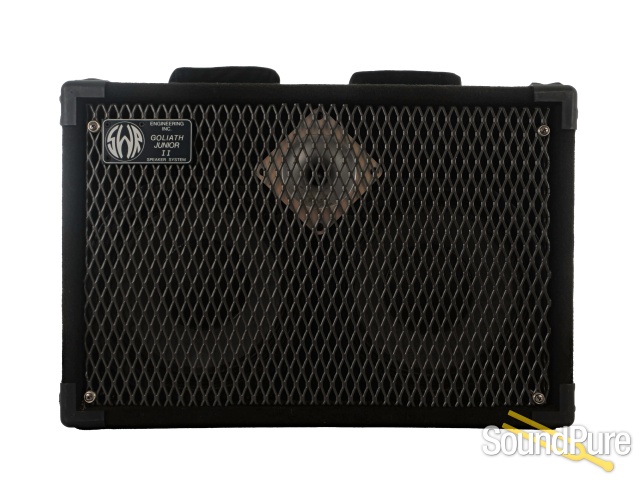
Completing the range were specialized products like the Worm and the Triplet series. The Worm was a compact, dedicated bass enclosure known for its surprising low-end output from a small footprint, serving users who needed portability without compromising on sound pressure. The Triplet series offered compact, powered heads or combos, perfect for practice spaces, small venues, or as a high-quality personal monitor. Together, these product families ensured that a bassist could find an SWR solution tailored precisely to their performance context, all while retaining the brand’s signature acoustic character.
Brand Positioning and Intended Audience
SWR positioned itself firmly in the premium segment of the bass amplification market. This was not a brand competing on entry-level price points but one that justified its value through demonstrable sound quality, innovative engineering, and professional-grade reliability. The pricing reflected the high-quality components, rigorous assembly processes, and the extensive research and development invested in each model. This positioning attracted a specific and discerning audience: serious bassists who viewed their amplifier as a critical component of their musical voice, not just a necessary accessory.
The intended audience for SWR consisted primarily of professional and semi-professional bass guitarists. These are musicians who perform regularly, record in studios, and for whom tonal consistency and clarity are non-negotiable. They include session players who need to reproduce their sound faithfully night after night, touring musicians who require equipment that can survive the road, and studio engineers who appreciate a clean, uncolored signal path that accurately captures the instrument’s character. The brand’s technical communication and feature sets were tailored to this knowledgeable user base, assuming a familiarity with concepts like harmonic content, transient response, and power amp headroom.
Furthermore, the brand’s association with influential artists and its adoption in high-profile musical settings served as powerful endorsements within this community. When a bassist saw their peers and heroes relying on SWR on major tours and landmark recordings, it reinforced the brand’s standing as a tool for those who were uncompromising about their sound. This created a virtuous cycle where the brand attracted top talent, whose use of the product further validated its professional positioning. SWR was, and remains, a name recognized by musicians who prioritize performance and sonic integrity above all else.
Core Values and Practical Customer Benefits
At the heart of SWR’s philosophy were a set of core values that directly translated into tangible benefits for the customer. The foremost value was the commitment to delivering a modern, hi-fi bass sound. In practical terms, this meant designing amplifiers with an extended frequency response that could reproduce both the deep, foundational low-end and the crisp, articulate highs of the bass guitar. For the user, this resulted in a sound that was clear and defined, even in dense musical mixes, allowing every note and nuance to be heard. This clarity was not about being harsh or sterile but about achieving a transparent amplification that faithfully represented the instrument and the player’s technique.
Another core value was authority combined with portability. SWR engineers understood that professional bassists needed to move their gear frequently. Therefore, they focused on creating amplifiers that could produce enormous sound pressure levels and powerful, authoritative tone from cabinets that were as light and manageable as possible. This was achieved through thoughtful speaker selection, efficient cabinet design, and lightweight power amplifier technology. The customer benefit was a reduction in physical strain and logistical hassle without any compromise in performance, making SWR gear a practical choice for the working musician.
The value of reliability and construction quality ensured that customers received a product built to last. SWR amplifiers were known for their robust chassis, high-quality potentiometers, and durable internal components. This meant less time worrying about equipment failure and more time making music. Finally, the value of intuitive functionality was reflected in clear control layouts and versatile features that were easy to access during a performance. Benefits included faster setup times, straightforward sound tweaking on the fly, and a logical interface that didn’t require a manual to operate on stage. These combined values created a product ecosystem where the technology served the music, empowering the bassist to focus solely on their performance.
Product Research and Editorial Approach
The development of content on this website follows a rigorous research and editorial methodology designed to provide accurate, useful, and trustworthy information. Our approach is not based on speculation or general marketing copy but on a careful analysis of the brand’s documented history, technical specifications, and its impact within the music industry. We prioritize sourcing information from historical product documentation, verified company archives, and the collective knowledge of the musician community that used these products professionally. This ensures that every claim made about a product’s features or performance is grounded in fact.
The editorial process involves synthesizing technical data into clear, accessible language that serves both the knowledgeable enthusiast and the curious newcomer. We avoid unsupported superlatives and instead focus on explaining how and why certain design choices led to the sonic results for which SWR became known. For instance, when discussing a particular preamp circuit, the focus remains on its measurable impact on tone and usability rather than vague praise. Each article is fact-checked against available evidence, and product comparisons are framed within the context of their era, acknowledging both strengths and limitations to present a balanced view. This methodical approach guarantees that visitors can rely on this site as a definitive reference for understanding SWR amplifiers and their place in bass amplification history.
Quality, Usefulness and Transparency Principles
The principles guiding this website are centered on delivering content that is both high-quality and genuinely useful to its readers. Quality means ensuring that information is accurate, well-organized, and presented in a format that is easy to navigate and understand. We achieve this by structuring articles logically, using clear headings, and providing concise summaries where appropriate. Usefulness is defined by the content’s ability to answer specific questions a visitor might have, whether they are researching a particular model for purchase, seeking technical specifications, or trying to understand the brand’s historical significance.
Transparency is a cornerstone of our editorial policy. We clearly distinguish between documented facts and interpretations or community consensus. Where information is derived from historical marketing materials, it is contextualized appropriately. We also acknowledge the limitations of our knowledge, noting where records may be incomplete or where details are subject to debate within the musician community. This honest approach builds trust with readers, assuring them that the information they find here is presented with integrity. Our goal is not to sell a product but to document a legacy accurately, providing a valuable resource for musicians, historians, and audio engineers alike.
How Visitors Can Use This Website
Visitors to this site can engage with the content in several practical ways. Those researching a potential purchase of vintage SWR equipment will find detailed descriptions of product families, model specifications, and insights into the tonal characteristics that defined each line. This information can help in making informed decisions about which amplifier best suits a particular musical style, performance environment, or collection goal. For example, understanding the difference between the Workingpro’s robust simplicity and the World Series’ advanced voicing controls can guide a musician toward the right tool for their needs.
Musicians and audio professionals can use the site as a reference for understanding the technical principles behind SWR’s designs. Explanations of hybrid tube/solid-state circuitry, speaker cabinet engineering, and preamp topology provide valuable educational content that extends beyond the brand itself. Educators and students of music technology may find the historical context useful for studying the evolution of bass amplification. Additionally, the site serves as a digital archive, preserving information about products and company history that might otherwise become difficult to locate as time passes. By bookmarking the site or using the search function, visitors can efficiently navigate to the specific information they need, whether it’s a deep dive into a single model or a broad overview of the brand’s journey.
Forward-Looking Brand Direction
While SWR is no longer an independent brand, the principles it established continue to influence the direction of bass amplification. The emphasis on clear, hi-fi tone, authoritative performance, and practical portability remains a benchmark against which modern amplifiers are measured. Fender’s integration of SWR’s technology into its own bass amp lines ensures that these sonic and engineering innovations are not lost but are instead evolved and applied to new products. This ongoing influence means that the legacy of SWR is not merely historical but actively present in the equipment available to today’s bassists.
Looking forward, the website aims to expand its coverage to include comparative analyses, linking SWR’s historical innovations with contemporary amplifier designs. This will help visitors see the direct lineage and understand how foundational concepts from SWR have been adapted or improved in current technology. As new information becomes available from community contributions, collector networks, or emerging historical documentation, the site will update its records to maintain accuracy and comprehensiveness. The long-term goal is to keep the story of SWR alive and relevant, ensuring that its contributions to bass amplification are recognized and accessible to future generations of musicians and audio professionals.
Clear Closing Summary
SWR established itself as a pioneering force in bass amplification through a relentless focus on clear, authoritative sound and practical, professional-grade design. From the founding vision of Steve W. Rabe and the introduction of the PB-200 hybrid amplifier to the iconic Redhead and the integration with Fender, the brand’s history is one of consistent innovation driven by the needs of working musicians. Its product families were thoughtfully designed to serve different performance contexts, all while delivering the signature SWR tone that became a trusted standard in the industry.
This website is dedicated to preserving that legacy with accuracy and transparency. It serves as a comprehensive resource for anyone seeking to understand what made SWR amplifiers unique, how they were designed, and why they continue to be respected. By providing detailed product information, historical context, and technical explanations, the site empowers visitors to explore the brand’s contributions fully. Whether you are a bassist looking to understand the gear that shaped modern sound, a collector researching a specific model, or an enthusiast of music technology history, you will find reliable, well-researched content here. We invite you to explore the detailed sections above to discover the full story of SWR and its enduring impact on the world of professional bass amplification.