
-
Call Us Toll Free888-528-9703
-
Local/International (+1)919-682-5552





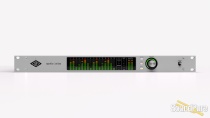
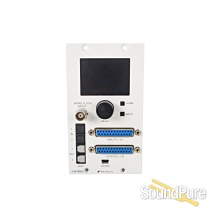
Desktop thunderbolt 3 converter and interface. In used, Mint condition

This one is sold. Don't miss the next one. Some things never even make it to the site so stay up to date on our used collection.
We get in many oddities, rare and vintage products, most of which go fast. If you're on the hunt for something specific, something unique, or something priced right, let us notify you on our used collection before the items even hit the site.
Want to know if one lands?
Notify MeWant to discuss what's coming?
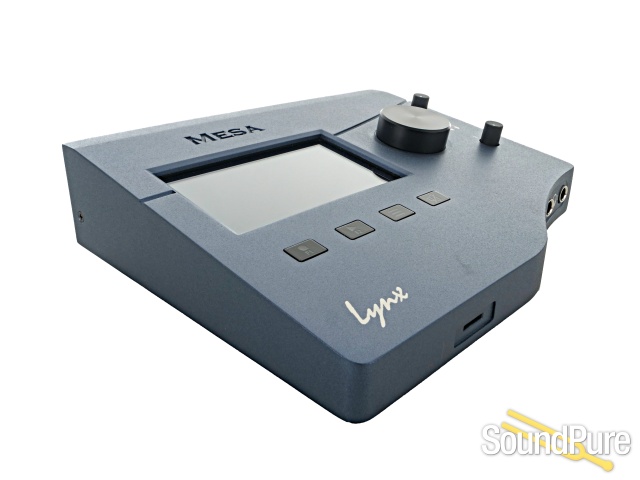
The Lynx Mesa feels like a converter designed by people who actually understand modern studio workflow.
At its core, it’s an incredibly high-end AD/DA interface with the kind of transparency and detail you’d expect from Lynx—but what really makes the Mesa stand out is how elegantly it combines that level of audio quality with flexibility and integration for hybrid studios. It feels less like a traditional interface and more like the central nervous system of a serious recording setup.
Sonically, the Mesa is exactly what you want from a top-tier converter: open, detailed, and trustworthy. The stereo image feels wide and stable, transient detail comes through effortlessly, and there’s a sense of depth that makes critical listening easier rather than more fatiguing. It doesn’t hype things or impose a strong character—it simply lets you hear what’s actually there.
What we especially appreciate is the headroom and clarity. Whether you’re tracking through high-end outboard, mixing through analog chains, or mastering, the Mesa stays composed and transparent in a way that inspires confidence. That kind of honesty matters when you’re making important decisions.
The workflow side is equally impressive. With flexible routing, network audio capability, and modern connectivity options, it integrates cleanly into both traditional studio setups and more advanced hybrid or immersive systems. It feels designed for engineers who want their interface to stay out of the way while still giving them powerful control over signal flow.
There’s also a refinement to the overall experience that stands out. The software is intuitive, the monitoring feels immediate, and the system as a whole comes across as stable and thoughtfully engineered—qualities that become increasingly important the larger and more complex a studio gets.
For engineers looking for flagship-level conversion paired with modern flexibility and serious studio integration, the Lynx Mesa feels like a forward-thinking centerpiece built for the realities of today’s professional workflows.
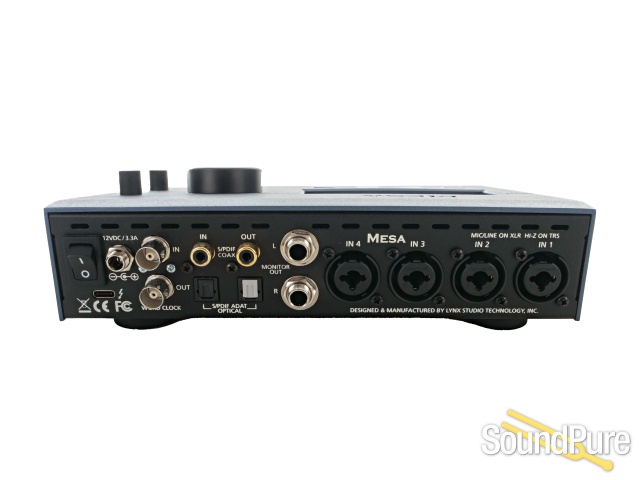
Mesa offers a desktop form factor, making it ideal for everyone from home/project recording setups to production rooms in commercial recording facilities. Compact and easily portable, Mesa offers four analog inputs and two outputs for monitoring, along with dual headphone outputs with independent level controls.
The Lynx Mesa offers a hi-contrast capacitive touchscreen interface — the same as in the company’s renowned Hilo 2 — making perfect for standalone use. Mesa owners will also be able to access its functions via the included Mesa Control software. A built-in MicroSD card slot allows Mesa to be used as a primary or backup recording device, making it useful for live/remote recording needs.
Designed for musicians, recording engineers, live sound engineers, and others who require the very best in pristine, detailed audio, Mesa offers the same level of audio quality and transparency as the company’s acclaimed Aurora(n) interface/converter. Other Mesa users include those involved in location recording — live performances, house of worship services and more — as well as for purposes including playback that can be done either via the onboard MicroSD card or its Thunderbolt 3 connection.
Mesa’s combo input connectors accept Mic, Line and D.I. signals, so users can plug in directly with instruments like electric guitars, bass, and keyboards, as well as microphones, and are selectable on a per-channel basis. Its monitor outputs are on ¼” balanced TRS connectors. Designed for professional applications, Mesa also features S/PDIF coaxial I/O, with its optical port supporting both S/PDIF (2 channel) and ADAT (8 channel) formats, and also includes Word Clock in and out.
The Lynx Mesa is compatible with all Digital Audio Workstation (DAW) platforms on both Mac and Windows, including Pro Tools, Logic Pro, Ableton Live, FL Studio, Cubase, GarageBand, and more. This universal compatibility makes it ideal for music and audio creators who require flexibility in working seamlessly with multiple DAW systems.
Lynx Studio Technology, Inc. is a debt-free, privately held corporation that designs and manufactures professional, computer related audio products. The company was formed by a team of engineers previously associated with industry-leading digital audio companies with the goal of utilizing cutting-edge technology to create the highest quality products at a good value to the customer. The Lynx team is focused on "linking" the professional audio world with computers by utilizing their many years of experience in both hardware design and device driver coding. This complementary expertise is borne out in reliable products that not only have great specifications, but are also shipped with extremely stable and well-tested drivers. Support for Windows 95/98/ME/NT/2000/XP and Macintosh platforms are standard for most products. With the ability to support multiple platforms, buses, and operating systems Lynx plans to supply products to a variety of audio markets and applications such as audio production, delivery, and testing for recording studios, project studios, post production studios, home studios, and live concert settings. Lynx supports the retail market with a standard product line through its dealers and distributors. Lynx also supports OEM?s for larger quantities and custom designs. For information regarding retail and OEM sales please contact us at:
Line in
Mic In
Hi-Z In
Monitor Out
Headphone Out
S/PDIF I/O coax: transformer-coupled on RCA jacks
S/PDIF I/O optical: on optical connectors
ADAT I/O: 8 channels at 48 kHz when selected on optical connectors
© Sound Pure LLC 2026. All Rights Reserved.











 919-682-5552