The AEA RPQ 500 is at a price point that literally any studio owner with a ribbon microphone should have one, if not two of these. The extension of capability in a typical ribbon microphone is evident in the first moments you dial in the high frequency "tone shaping." One of the most wonderful attributes of ribbons is their inherent EQ-friendliness, which this box truly embraces.
Like the original 1U rack unit, the AEA RPQ, this little 500-series rack is a game changer for anyone who wants to take their Ribbon micorphone collection “all the way” in terms of functionality. An AEA RPQ (The traditional rack-version) lives in the control room of Sound Pure Studio A, and has served as the baseline to a great many records where ribbons were used over here at Sound Pure.
Click Here to check out the Stereo RPQ
The smooth and round transients of a great ribbon microphone, whether it be a classic Coles 4038, or a more modern and masterful ribbon such as the AEA R84 or Royer R121 can create remarkable musicality in certain circumstances. The organic and natural smoothness of a ribbon can translate musicality across a wide range of sound sources – whether taming the scratch and aggressive nature of an electric guitar cabinet up close, or smoothing out the potential abrasiveness of a screaming trumpet, ribbons can be an outstanding choice. Unfortunately, few preamps in the world have every truly been designed to give ribbons the best-possible representation. That's where the AEA RPQ comes into play, and then goes further.
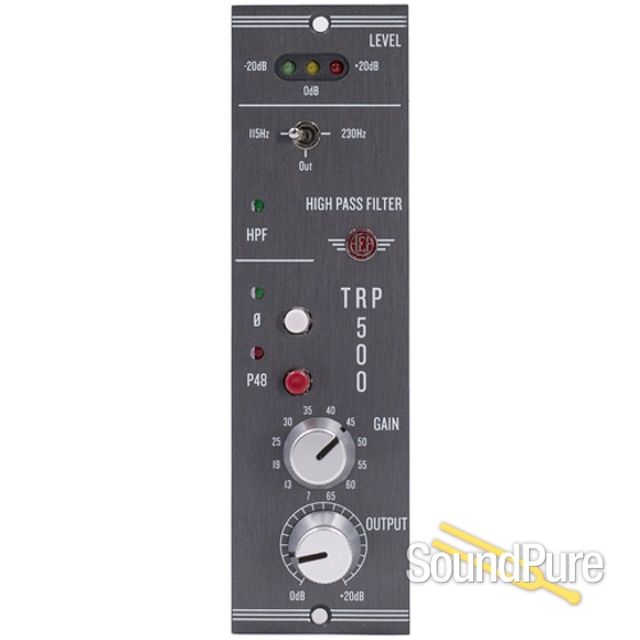
Ribbon microphones finally have a flattering preamp designed specifically for their use. But, the truth is that AEA did this, and actually did this quite well already, with the original AEA TRP:
http://www.soundpure.com/p/aea-trp-stereo-ribbon-microphone-preamp/829
This article, written by leading microphone expert (and member of the Sound Pure team) Todd Atlas, describes just how the AEA RPQ takes a non-traditional use of ribbon microphones and makes them shine:
“Ribbon Mics on Acoustic Guitars: Royer R121 Ribbon Microphones with the AEA RPQ Mic Preamp: How To Get the most out of a Ribbon Microphone (ribbons are not just for electric guitars, anymore!)”
Don't hesitate to check out the video on the first tab that shows how ribbons can be “brightened and heightened” with the use of this absolutely brilliant preamp design, from one of the most ribbon-minded geniuses in the entire industry, Wes Dooley, owner of AEA along with one of the greatest living audio engineers, Fred Forssell who has secretly and not-so-secretly been involved in the design and creation of some of the finest preamp designs in modern recording history.