• Account
  • View Shopping Cart

Menu Search View Shopping Cart Call Us
desktop

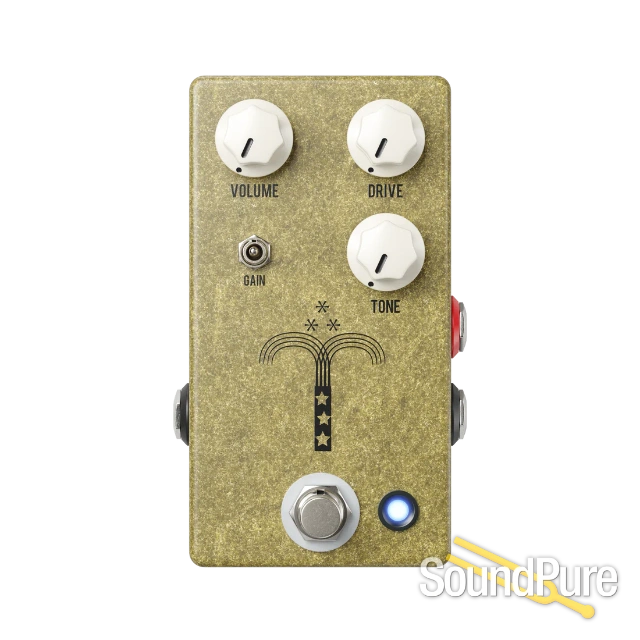
JHS Morning Glory Clean Overdrive Pedal  From JHS

A New Take on A Legendary Overdrive Pedal by JHS!

JHS Pedals

$179.00

No Sales Tax in OH!
No Sales Tax in 45 States. Learn More.

"Experience the Difference"

Sound Pure's 3-Year Warranty

Close
Our Free 3-Year Warranty!
In addition to the standard included manufacturer warranty, virtually all new products carry our exclusive, industry-leading, absolutely free, Sound Pure 3-Year Warranty, which includes PARTS & LABOR. This high-value perk is our way of providing the ultimate in added value to enhance the unique personal touch our small, dedicated team contributes to each purchase.
Learn more »

Lifetime Support

Close
Free Lifetime Technical Support!
Our small team of dedicated experts is here to help the original purchaser for the lifetime of the product. Why? Because we care about building real relationships with our customers for life and stand behind every product we sell.

Free Shipping

Close
This Product Ships Free!
Products ship from our well-located, climate- and humidity-controlled warehouse absolutely free (inside the continental USA). Low-cost international shipping options exist for most products.
Contact us for details »

No Sales Tax collected in OH.

Close
Sales Tax
Sales tax is only collected in the following states: FL, GA, IL, NC and VA. If your state is not listed, sales tax will not be collected on your order.
In Stock!
Ships immediately after order processed!
Payments as low as $15/mo.

Manufacturer's Description from JHS

WHEN TRANSPARENT OVERDRIVE ISN'T GOOD ENOUGH

We took our most legendary overdrive to a new level and redefined what it means to be transparent. Clearer pick attack, improved low end, and more versatile gain stacking. 


This is the ultimate first-stage overdrive pedal. 


IT STARTED AT SOUND CHECK. 

I watched Ju­lian Lage dial in his tone at a sound­check in Chica­go. Vin­ta­ge Fen­der amp. Collings semi-hol­low gui­tar. He ad­just­ed pickup heights, moved po­si­tions on stage, chas­ing the per­fect bal­ance. It was cap­ti­vat­ing. 


Ju­lian has used a Morn­ing Glo­ry for years — he's a big rea­son it end­ed up on jazz ped­al­boards world­wide. Af­ter the sound­check, we dis­cussed what he looked for in an over­drive. One thing led to an­oth­er. My brain start­ed wan­der­ing off into dif­fer­ent ideas. Could we make the Morning Glory even better? 


THE PROBLEM WITH TRANSPARENT.

When you add over­drive — any type of clip­ping — you lose nu­ance. Pick at­tack gets com­pressed. Dy­na­mics nar­row. All overdrives shape frequency response, even the most transparent.


So we tried some­thing no one's done: we took our Morn­ing Glo­ry (a Blues­breaker-style topol­o­gy) and com­plete­ly re­built it around a stu­dio-grade par­al­lel clean blend. Not just a mod­i­fi­ca­tion, a re­design from the ground up.


On pa­per, it seemed point­less — why blend a clean sig­nal into some­thing al­ready trans­par­ent? 


Here's why. The Morn­ing Glo­ry's magic happens when you turn up the Drive, the circuit boosts higher harmonics and adds soft com­pres­sion. Jan­g­ly. Per­fect in a mix. The par­al­lel clean cir­cuit lets you keep all that while di­al­ing the nat­ur­al low end back in — all the tone, all the char­ac­ter. Noth­ing com­pro­mised.


THIS ISN'T A CLEAN KNOB SLAPPED ON A MORNING GLORY. 

For those won­der­ing — let's talk about what's ac­tu­al­ly hap­pen­ing in­side.


The Clean con­trol uses a dual-gang po­ten­tiome­ter. As you turn it, clean gain scales pro­por­tion­al­ly with the drive sig­nal — it’s per­fect­ly en­gi­neered from the ground up. Most clean blends are an af­terthought — a sim­ple mix knob tacked onto an ex­isting cir­cuit. This one was de­signed so the two sig­nals track to­geth­er across all gain settings. No vol­ume jumps. No weird phase is­sues. Just seam­less blend­ing from Morn­ing Glo­ry to pure sig­nal and every­thing in-be­tween. 


The pow­er sec­tion runs on a ±9V dual sup­ply — the same topol­o­gy as our V4 — which gives you high­er head­room than the orig­i­nal V1 cir­cuit and any oth­er Bluesbreak­er-style ped­al out there. This is where most clones get it wrong. Think of it as the orig­i­nal Ver­sion 1 Morn­ing Glo­ry voic­ing with the V4 en­gi­neer­ing en­hance­ments. 


The Tone con­trol af­fects only the over­drive path. Your clean sig­nal stays par­al­lel and un­touched. For the peo­ple who care about this stuff: this is the most thought-out and so­phis­ticat­ed Morn­ing Glo­ry we've ever built. 


ENDLESS HEADROOM, ANY VOLUME.

End­less head­room. Those mas­sive clean gui­tar sounds that you love on record­ings — most were made at vol­umes that would get you evict­ed. The Morn­ing Glo­ry Clean gives you the stiff­ness and au­thor­i­ty of a high-wattage amp at the edge of breakup — with­out the earplugs. 


Think of the Clean con­trol as adding back in wattage, clar­i­ty, and punch.


IT GOES ON EVERYTHING.  

Stack a dis­tor­tion in front and the sus­tain opens up in­stead of clos­ing off. Run it af­ter de­lay for new territories of series/parallel textures. First-stage over­drive? This is the best we've ever built. Pe­riod.


It breathes in front of amp mod­el­ers too. The over­drive and pres­ence of the classic Morn­ing Glo­ry, with your at­tack and low-end con­tent di­aled back in — magic in front of a Kem­per, Quad Cor­tex, UAD, or He­lix. 


Bass play­ers: the orig­i­nal Morn­ing Glo­ry rolls off low end just like a fi­nal mix. That's why you love it — that's why it's be­come a stan­dard on so many pro bassists' boards. The clean blend di­als that low end back on com­mand for your dif­fer­ent bass and ampli­fi­er needs. This might be the best bass over­drive we've ever made. 


Who this isn't for.


This ped­al isn't for every­one and we're con­fi­dent in say­ing that. If you want the dopamine hit of a wild new sound, look else­where. If you want tons of con­trols, tweaka­bil­i­ty, bells and whis­tles — this is not that. This ped­al does less while giv­ing you more. No bad sounds. Im­me­dia­te gra­ti­fi­ca­tion. Leave it on and for­get it's there. 


CON­TROLS 

Vol­ume — Adjusts the overall volume in conjunction with the drive and clean.   


Clean — Full left: orig­i­nal Morn­ing Glo­ry. Full right: pure clean sig­nal. Start with Clean and Drive maxed, dial Clean back (counter clockwise) un­til you find your perfect bal­ance. 


Drive — Sat­u­ra­tion. Crank it and use the Clean con­trol as your bal­ance. This ped­al is de­signed to be used this way. 


Tone — Clas­sic Morn­ing Glo­ry tone stack. Af­fects only the drive path. Back for warmth, for­ward for clar­i­ty. 


Clean Boost Pro Tip – Morning Glory Clean can be used as a stand-alone clean boost.  Set the Clean to 100% (fully clockwise) and  increase the Drive.  In this configuration, the Drive will not produce any overdrive clipping - only clean volume boosting. 

JHS Pedals

About Manufacturer

2007

Sometime in early 2007, Josh fixes his BOSS BD-2 Blues Driver by replacing a footswitch that isn't activating properly. Because of this, he becomes super interested in how pedals work and in their circuitry.

Around April 2007, Josh begins to modify his friends' pedals and decides to start selling modified BOSS pedals under the name JHS Mods. These pedals are sold at his friend's local guitar shop, Fondren Guitar, in the Fondren area of Jackson, MS. The first modified pedals ever sold are the Lexi Drive (modified DS-1) and Blu Drive (modified Blues Driver). These early units have a simple black label with a green JHS Mods logo and are all modified in a small upstairs attic room on a folding card table.

2008

Josh begins learning to build his favorite pedals from scratch, leading to original JHS pedal ideas and designs. The earliest JHS releases include the Pulp 'N' Peel, the All American and the Morning Glory. The Morning Glory is created by reinventing his favorite Marshall Bluesbreaker pedal.

Sometime in mid-2008, the name JHS Mods is replaced by JHS Pedals to reflect the more diverse product line that now includes modifications and custom pedals.

Josh builds a DIY website, causing more online growth and providing a wider reach than his local customer base, which is also growing.

Every pedal from 2008 is still being built in Josh's spare room on a folding card table.

2009

In the summer of 2009, Josh relocates from Jackson, MS, to Tupelo, MS. He repurposes his brother-in-law's small backyard tool shed, transforming it into a functional work area. Almost immediately, he installs a window AC unit to combat the scorching 100+ degree Mississippi summer days. It is in this shed that the Double Barrel, Sweet Tea and numerous other designs take their initial form.

This becomes the focal point of Josh's first press interest when a newspaper article showcases the shop's distinctive pink walls, which are actually insulation sheets Josh and his dad used to retain cold air. Consequently, the shop earns the moniker "The Pink Palace" among friends and local guitarists who frequent the space.

During this period, Josh also introduces his original designs to the public by selling them at Mainstreet Music, a guitar shop in Tupelo. Furthermore, Josh collaborates with Drew Shirley of Switchfoot to launch the BunRunner fuzz pedal. This collaboration propels the company into a faster trajectory of growth and notoriety, attracting the support of many major artists.

In the fall of 2009, the JHS shop makes another move, this time to Josh's father-in-law's backyard workshop in Ecru, MS. It is from this location that the Mini Foot Fuzz, Pollinator and various other designs are first crafted and sold.

In December of 2009, Josh relocates to Kansas City, MO, driven by the escalating demand for his products. Recognizing the need for assistance, he brings in Nick Loux, the original JHS employee, and his lifelong friend Khaleed to join him in the endeavor of building guitar pedals.

The unfinished basement of their new Kansas City home undergoes a transformation into a fully equipped JHS shop, where up to six employees work side by side to craft pedals. As demands continue to grow, Josh and the team eventually make the transition to JHS’s first official commercial location, situated off Main Street in Grandview, MO.

2011

The Grassroots Dealer Campaign is initiated in the summer of 2011, marking JHS's proactive efforts to establish B2B dealer relationships. In a remarkable span of approximately thirty days, JHS experiences substantial growth, expanding from 5 to 50 retailers.

2012

Josh Scott embarks on a collaboration with the Chicago Music Exchange to create his own guitar pedal demos. This collaboration marks one of the pioneering instances of a pedal manufacturer partnering with a retailer to produce demo video series within the industry.

2013

JHS introduces a teaser video for the Moonshine Overdrive, marking the inception of the JHS Teaser Video Series and initiating a trend within the industry for this form of marketing.

In September 2013, JHS Pedals is selected for Premier Guitar magazine's Pedal Builder Profile, representing the most significant press coverage for JHS up to that point.

2014

JHS makes its debut at the Winter NAMM Show in Anaheim, CA, marking a significant milestone for the company. At the show, they unveil the Colour Box V1, a pedal that represents a groundbreaking innovation and a departure from the conventional pedal norms.

2015

Josh and Robert Keeley collaborate on a pedal and release the Steak and Eggs Overdrive/Compressor, marking an industry first for two competing boutique pedal companies to collaborate on a major scale.

The Muffuletta teaser video is recorded during a brief 2.5-hour trip to New Orleans, and the product is released on September 15, 2015. The Muffuletta format represents a first for JHS, establishing a multi-pedal format with perfect analog replication of vintage/rare pedals instead of digital emulation.

In November 2015, JHS partners with Andy Timmons on the AT "@” Artist Pedal, which is subsequently released.

2016

JHS makes a groundbreaking announcement by introducing possibly the two most requested nonexistent guitar pedals of all time, namely the Bulb and the See Saw. Witnessing it is a must to truly believe it!

Additionally, JHS ventures into the realm of pro audio with the debut of the JHS 500 Series.

2017

Josh and Nick Loux embark on a collaborative journey, creating multiple video series, including “Combos,” “That Sounds Neat” and “Hot Trax,” which serve as early precursors to The JHS Show. Some of the most intriguing and enjoyable content arises from experimenting with and promoting other pedal companies' pedals instead of their own JHS gear.

Simultaneously, Josh delves into teaching guitar history at public events, leading him to realize that he might derive more enjoyment from this than making pedals. The jury's still out on this intriguing revelation.

On September 8th, the BOSS JB-2 Angry Driver is released, a pedal resulting from a collaboration between JHS and Boss to celebrate Boss's 40th anniversary. This is a significant honor for JHS Pedals.

2018

Following the same format as the Muffuletta, the Bonsai makes its debut at the January 2018 NAMM Show and promptly becomes the most successful JHS release up to that point.

On May 31st, Josh and Nick release the first episode of The JHS Show, marking the beginning of a new venture for JHS in the realm of content creation.

2020 + COVID

In a collaboration with Paul Gilbert, JHS introduces the PG-14 Paul Gilbert Artist Signature Pedal at the January 2020 NAMM Show.

In March 2020, the COVID-19 pandemic emerges, prompting JHS to swiftly adapt to the "new normal" by implementing safety measures for builders to socially distance in the shop and encouraging as many employees as possible to work from home.

Despite the challenges posed by COVID-19, on May 15th, 2020, JHS releases the Legends of Fuzz pedal series.

On October 2nd, 2020, JHS launches the 3 Series of pedals, further expanding their product lineup.

Specifications

±9V Dual Sup­ply (mas­sive head­room) 


Top-mount­ed jacks 


9V DC Cen­ter Neg­a­tive


Silent Buffered Bypass Switching


THIS PEDAL MEASURES 2.6” X 4.8” X 1.6” AND CONSUMES 60mA. DO NOT USE MORE THAN 9VDC. DAMAGE MAY OCCUR AND YOUR WARRANTY WILL BE VOIDED.