
Sound Pure's Take
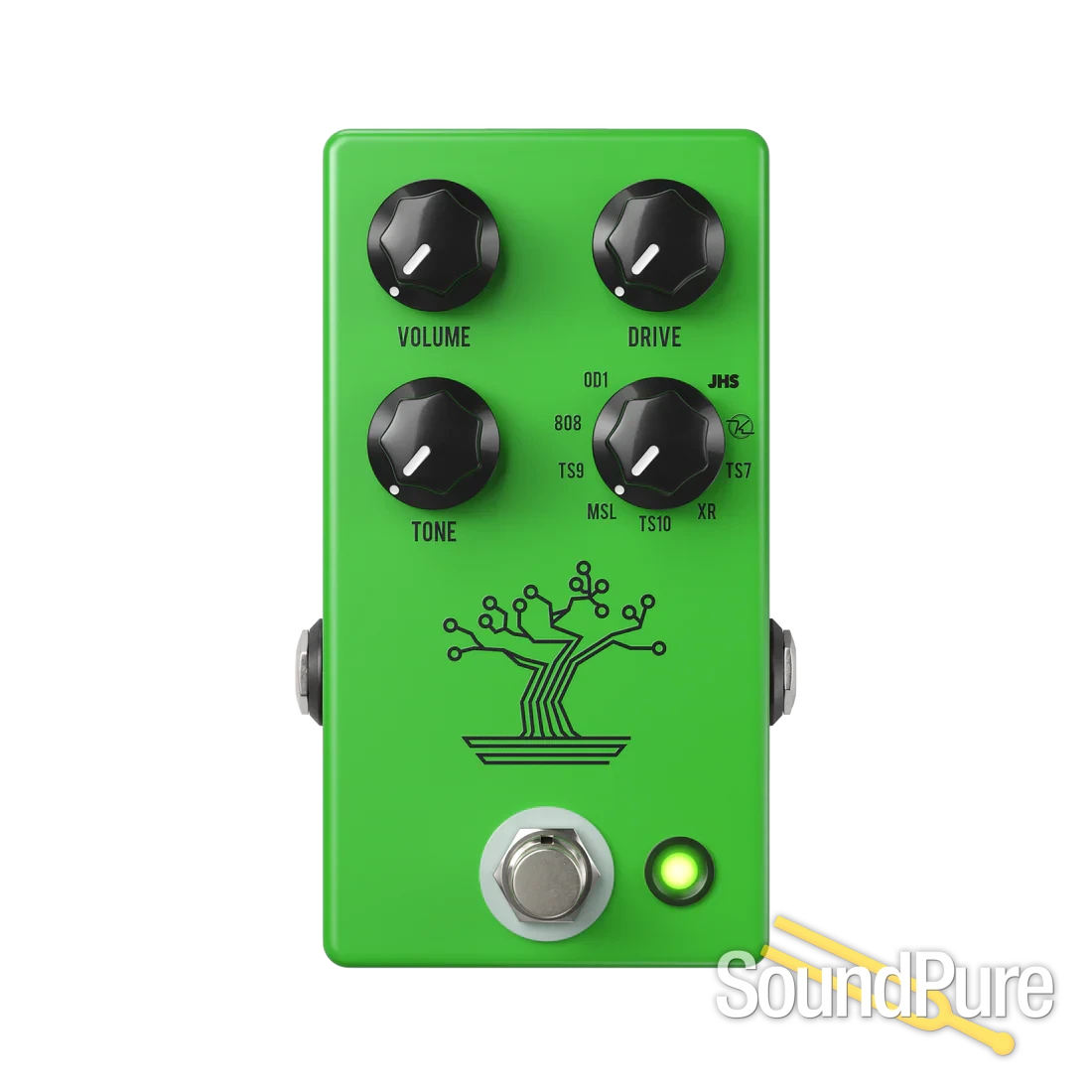
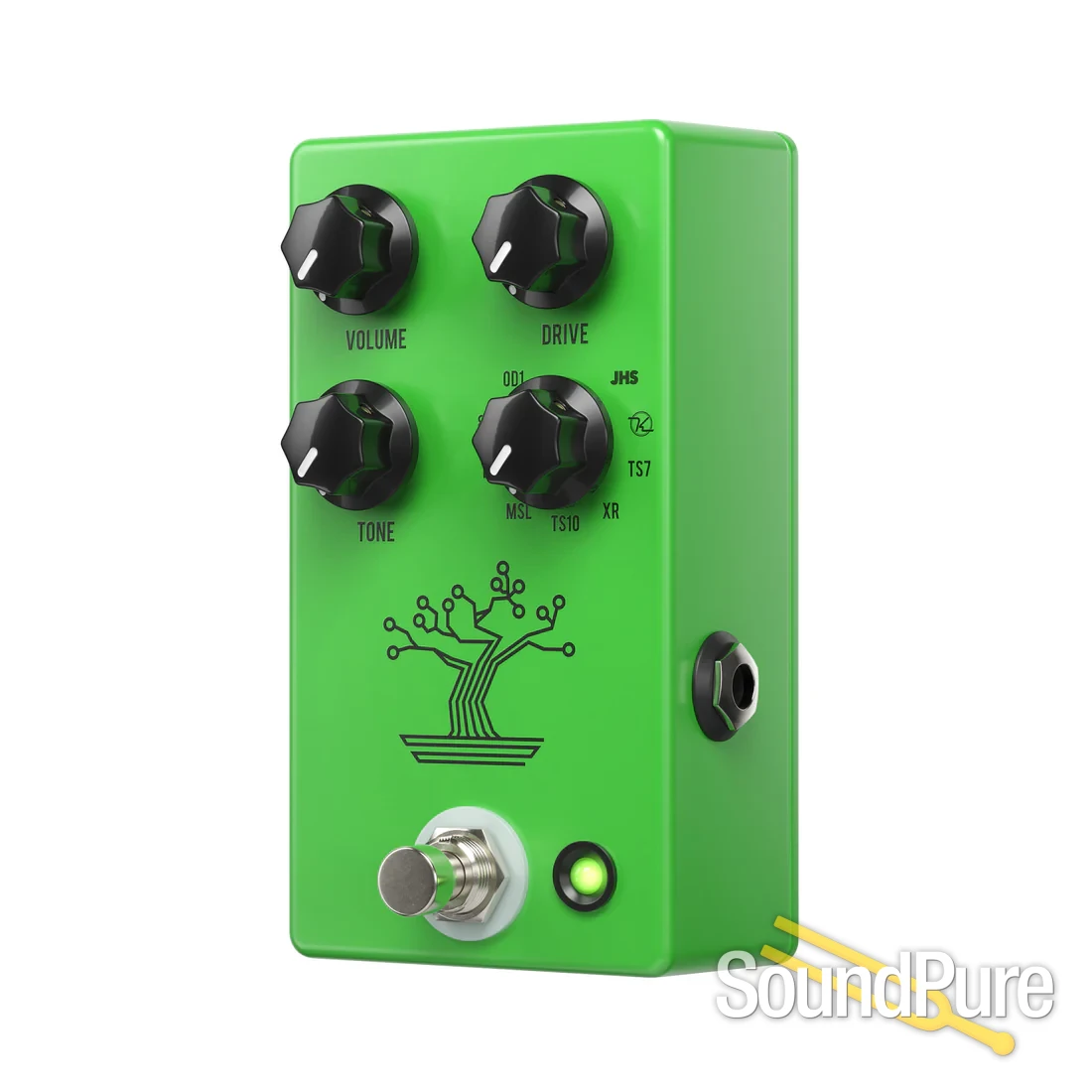
The JHS Bonsai is a brilliantly conceived overdrive that puts the entire Tube Screamer family tree under your feet, all in one beautifully built pedal. Featuring nine exact, component-accurate analog recreations of legendary circuits, it lets you explore subtle vintage nuance, mid-pushed classics, and higher-gain modern variants with a simple turn of the rotary knob. Each mode feels distinct, musical, and touch-responsive, making it easy to find the perfect drive for any guitar or amp. Thoughtfully engineered and endlessly useful, the Bonsai is both a creative powerhouse and a smart long-term investment for serious players.
From JHS Pedals
In the late 1970's the overdrive pedal was arguably perfected when Japanese engineers designed the sound that we now know as the heart and soul of so many of our favorite artists, recordings and sounds. Players ranging from The Edge, Trey Anastasio, Buddy Guy, Kirk Hammett, John Mayer, SRV, Carlos Santana and thousands more from every possible genre have utilized and depended on this classic iconic green box. If a single effect pedal was chosen to board a Voyager 3 mission and be solely responsible for showing the universe the sound of overdrive, it would undoubtably be Tube Screamer. It is probably the most produced and sold pedal in the history of guitar pedals! The Bonsai is our tribute to one of the greatest pedals ever created.
Following in the steps of our Muffuletta (released 2015), the Bonsai utilizes a simple rotary knob to switch through nine classic, vintage, rare, or hard to find variations of the Screamer. Creating the Bonsai became an archeological dig of sorts that sent us deep into the history of this circuit by examining dozens of versions, variations and replications. At the end of it all, Josh chose nine of his personal and favorite units and we painstakingly replicated every nuance and aspect of each pedal. One of the most challenging parts of this project was accounting for component drift as many of these pedals were decades old and the internal components had strayed from their original values. Each pedal was individually replicated using our Audio Precision analyzer and various other methods that allowed us to perfectly replicate every aspect of the sound and feel of the unit. It's important to know that the Bonsai is not a "box of mods," it is exact replications of these nine units all housed in one box! The Bonsai is exact replication, not emulation. When you choose a mode on the Bonsai rotary, you are actually activating components specific to each mode and playing the unit that Josh chose along with all the quirks, drift, vintage mojo, and individuality that a vintage pedal has.
The Bonsai Modes
OD-1 - 1977
An overall brighter and slightly higher gain mode that does not utilize the Tone knob. This mode also inverts signal just like the original and has asymmetrical clipping. The OD-1 is magical at boosting other drives or amps into singing saturation.
TS-808 - 1979
The classic low gain with that signature pronounced mid range.
TS-9 - 1982
Nearly identical to the TS-808 but with a slightly more pushed low-mid range.
MSL, POWER OR L SERIES - 1985
Though metal is in the name, this sound doesn’t quite inspire the modern metal djent we think of. Still it has a higher gain sound with a more low end and an overall more gooey feel.
TS-10 - 1986
Made famous by John Mayer, this model is a slight upgrade from the TS9 for the late ’80s. Bluesy, crisp, more low end roll off and low gain.
EXAR OD-1 1989
The EXAR is a Polish made TS-style pedal that has a slightly different drive character with a little more gain than the classic screamers as well as a slightly more transparent feel.
TS-7 (+MODE) - 1999
The hot mode on this version gives you the highest gain sound in the Bonsai. More low end and dirt fill out the tone to have you shredding away.
KEELEY MOD PLUS - 2002
Robert Keeley’s classic mod tightens up the tone on the original giving you smoother mid range and high frequencies, and increased bass response.
JHS STRONG MOD - 2008
Our own mod we’ve been doing since 2008 is much cleaner and overall more powerful. The mode has more pronounced higher and low end drop offs.
With the JHS Pedals’ Bonsai you can get the classic sounds of nine Tubescreamers in one pedal. Let the Bonsai help you find your overdrive zen.
THIS PEDAL REQUIRES STANDARD 9V DC NEGATIVE POWER, CONSUMES 20 MA, AND MEASURES 2.6"X4.8"X1.6".
THE WORDS IBANEZ, BOSS, ROLAND, TUBESCREAMER, TS9, 808, EXAR, AND KEELEY, AUDIO PRECISION MAY BE REGISTERED TRADEMARKS. THE JHS PEDALS BONSAI IS IN NO WAY AFFILIATED OR ENDORSED BY IBANEZ, BOSS, ROLAND, TUBESCREAMER, TS9, 808, EXAR, KEELEY, AND AUDIO PRECISION.
- Product Name
- JHS Pedals Bonsai
- Effect Type
- Overdrive
- Circuit Type
- Exact Analog Replications (Not Emulation, Not Modelling)
- Design Concept
- Tribute to the Tube Screamer circuit
Nine exact, component-accurate recreations of vintage and modified units
Rotary selector activates mode-specific components
Accounts for component drift and vintage variance
Developed using Audio Precision analysis
- Number of Modes
- 9
- Mode Selection
- Rotary Selector Knob
Bonsai Modes
- OD-1 (1977)
- Brighter, slightly higher gain
No Tone control
Inverted signal
Asymmetrical clipping
- TS-808 (1979)
- Low gain
Pronounced midrange
- TS-9 (1982)
- Similar to TS-808
Slightly more pushed low-mid range
- MSL / Power / L Series (1985)
- Higher gain
Increased low end
Gooey feel
- TS-10 (1986)
- Low gain
Bluesy and crisp
More low-end roll-off
- EXAR OD-1 (1989)
- Slightly higher gain
More transparent feel
- TS-7 (+ Mode) (1999)
- Highest gain mode
More low end and dirt
- Keeley Mod Plus (2002)
- Smoother mids and highs
Increased bass response
- JHS Strong Mod (2008)
- Cleaner
More powerful output
Pronounced high and low end roll-offs
- Controls
- Rotary Mode Selector
Standard Tube Screamer-style controls (implied but not explicitly listed by name)
Power Requirements
9V DC
Negative Center
- Current Draw
- 20 mA
- Dimensions
- 2.6" x 4.8" x 1.6"
- Pedal Category
- Overdrive
- Trademark Disclaimer
- Not affiliated with or endorsed by Ibanez, Boss, Roland, Tube Screamer, TS9, 808, EXAR, Keeley, or Audio Precision
Free 3-Year Warranty
In addition to the standard included manufacturer warranty, virtually all new products carry our exclusive, industry-leading, absolutely free Sound Pure 3-Year Warranty, which includes parts and labor. It's our way of adding real value to the personal touch our small, dedicated team brings to every purchase.
Coverage exclusions live in Terms & Conditions, Section 27. Read the warranty →

Sound Pure Studios · Durham, NC
Come hear it in our control rooms.
Sound Pure is a working studio in Durham, NC — a 1,000 sq ft live room and two pro control rooms. Book a session to audition gear in a world-class acoustic space before you buy.